Characters and events in this piece are composite illustrations drawn from typical cross-border journeys; all names are pseudonyms.
On the embryo-transfer consent sheet, Zheng Duo and Xu Zhixia ticked "single blastocyst" without a second thought. Both worked in central Beijing — he in M&A legal, she in corporate finance — and at forty-one they approached everything through margin of safety. Having read too many forum threads about extreme prematurity with twins, they wanted one healthy baby at full term.
Four weeks post-transfer, beta-hCG numbers came back unusually high. At week six, after the first transvaginal ultrasound in Yerevan, their coordinator called Beijing with cautious disbelief in her voice: "Only one 4AA went in, but it split on its own in the first days — monochorionic diamniotic identical twins, two strong heartbeats."
The living room in Beijing went silent for ten seconds. Spontaneous splitting happens in fewer than two percent of transfers; while relatives would have cheered at two for one, two people trained to price tail risk turned their phone ringers to maximum volume from that night on.
Rebooking at Capital Airport at 2 a.m.
Identical twins sharing a single placenta carry specific vascular risks, so from week sixteen the Yerevan obstetrics team moved ultrasound surveillance from monthly to every fourteen days, tracking amniotic fluid pockets and umbilical Doppler flows. After every scan, Zhixia logged both estimated fetal weights in a spreadsheet to check that the discordance stayed under fifteen percent.
They made it safely past week thirty-two before the call came at 1:40 a.m. Beijing time at thirty-four weeks and two days: regular contractions had started overnight, and the attending obstetrician recommended an immediate caesarean. Grabbing the carry-on bags parked by their front door for a month, they drove straight to Terminal 3 at Beijing Capital Airport to catch the earliest connection via Doha.
Across fourteen hours in the air, neither slept. Alongside fear for preterm lungs sat a second anxiety familiar to anyone who reads international surrogacy boards: stories of opaque overseas NICU stays where shell-shocked parents are handed unitemised five-figure demands with no translator in sight.
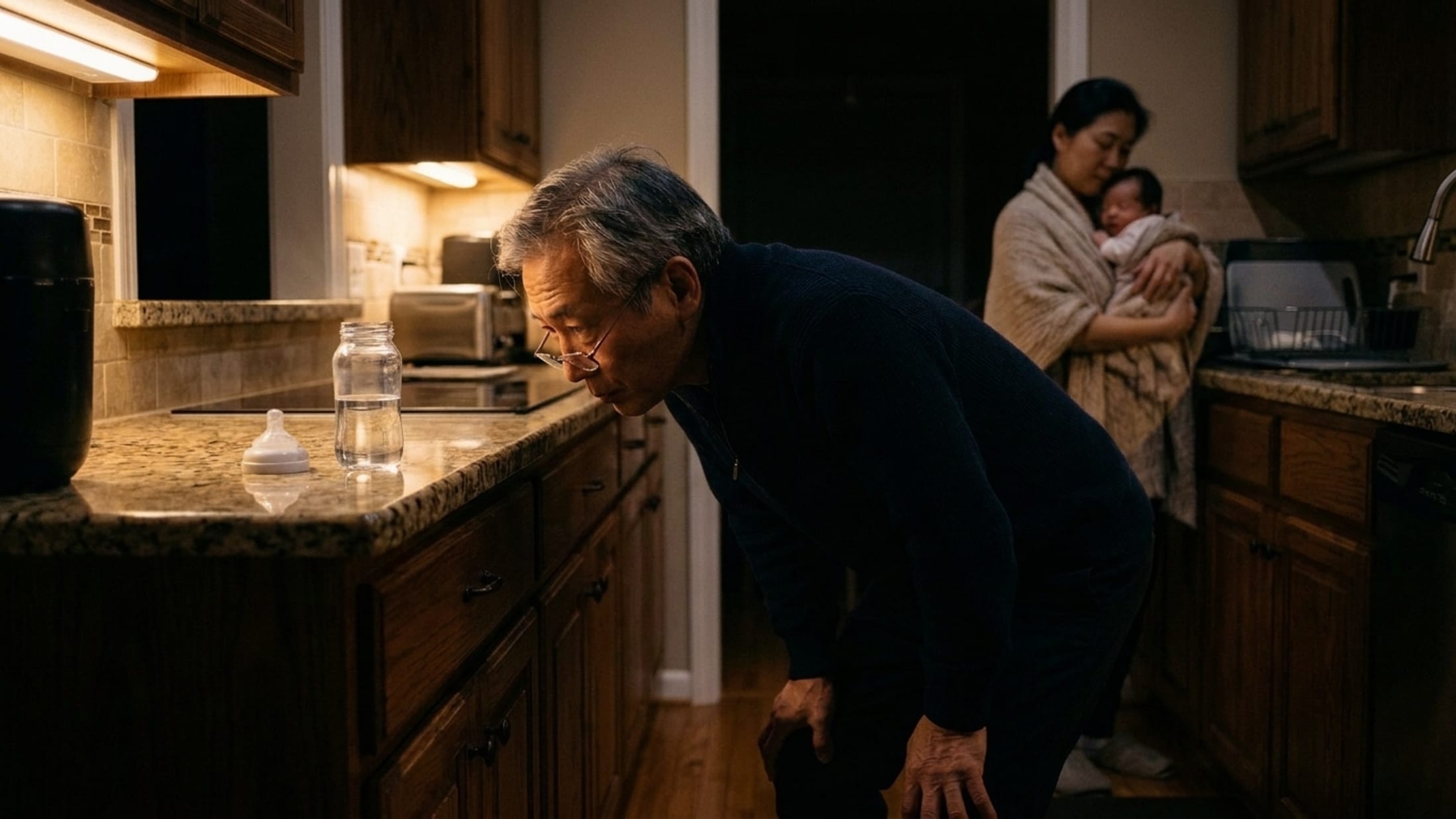
The 10:30 a.m. rounds sheet
By the time they walked onto the neonatal unit in Yerevan, twin boys were resting inside warmers: the older brother at four pounds eleven ounces needing only brief observation, the younger at four pounds four ounces on non-invasive CPAP respiratory support, phototherapy lights, and a thin nasogastric feeding tube. Recovering smoothly down the hall, the surrogate sent word through the interpreter telling them not to blame themselves.
The financial black box never materialised. While Armenian statute places pregnancy and complication medical costs on the intended parents, their signed agreement schedule required original stamped hospital billing ledgers and physician orders for every item outside routine delivery, reconciled directly at actual billed cost under the contract.
For eleven mornings in a row at 10:30 sharp, the local medical interpreter stood beside them at the incubator glass for neonatology rounds — translating oxygen weaning percentages, millilitre increases per tube feed, and bilirubin curves, followed at noon by a written Chinese summary stapled to the hospital's itemised daily statement. Watching the numbers step down day by day finally let Zhixia breathe again.
Swapped lines in the notes app
On the morning of day eleven, the younger twin had his feeding tube removed, finished thirty-five millilitres of preterm formula from a bottle on his own, and cleared the 2,100-gram discharge mark.
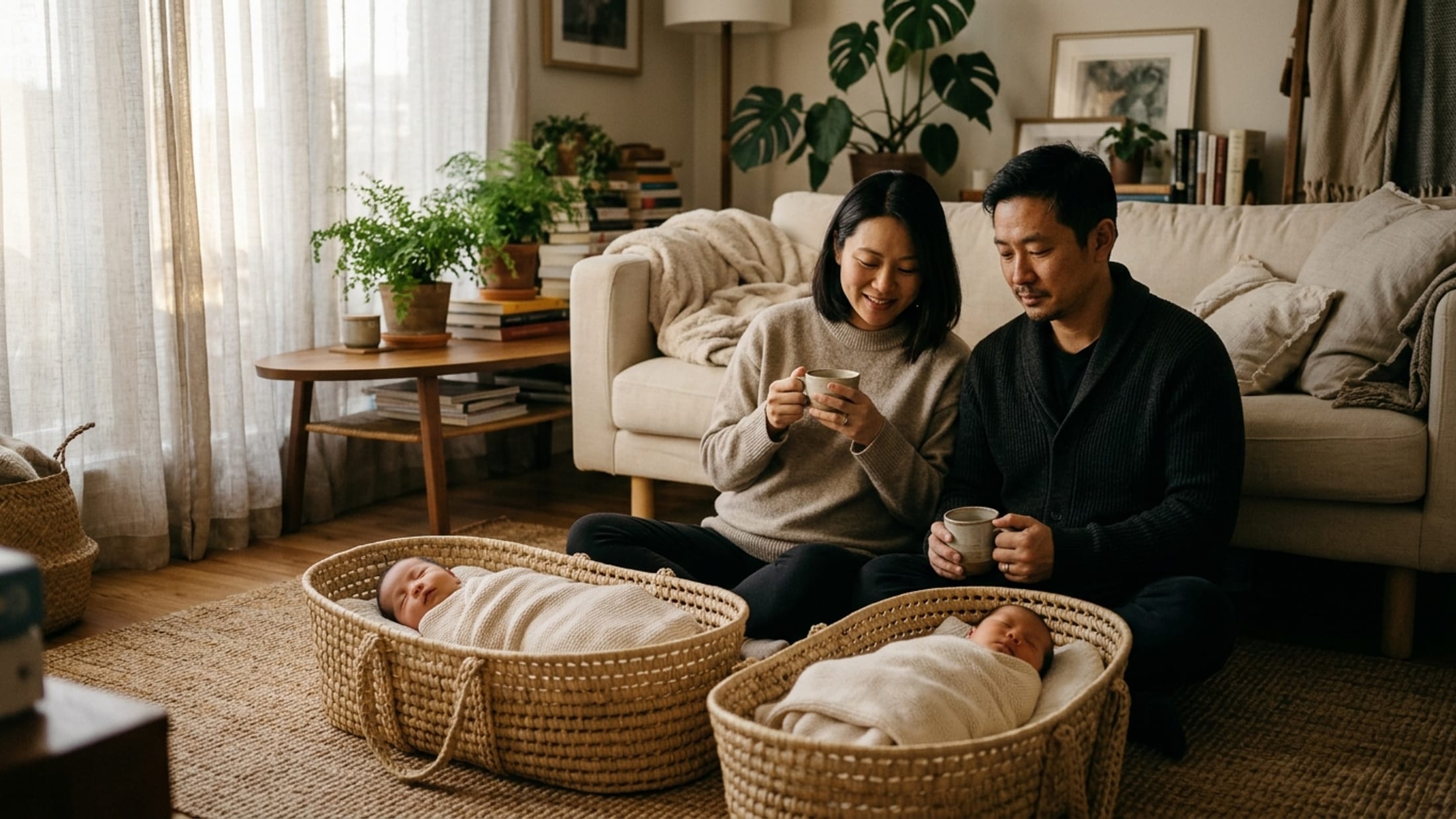
At 4:30 a.m. on their first night back in the rented apartment, pale dawn filtered through the linen curtains onto two woven Moses baskets set side by side on the rug. Too spent to climb back into bed after the night feed, both of them sat cross-legged on the floor leaning against the sofa with half-finished cups of warm tea. Unlocking his phone to log a wet diaper, Zheng Duo stared at his notes app and let out a quiet breath — half-asleep at 3:30, he had typed each brother's millilitre count under the other's name.
Disclaimer: this article is general information and not legal or medical advice. Before making any decision on the legal matters discussed, consult a licensed attorney in the relevant jurisdiction; for medical matters, consult a physician.