Characters and events in this piece are composite illustrations drawn from typical cross-border journeys; all names are pseudonyms.
Around the tenth of every month, Lin Zhe poured a mug of black coffee at his desk in Bellevue and refreshed the State Department's monthly Visa Bulletin. Between age twenty-eight, when he joined a cloud-security firm on OPT, and thirty-five, when HR filed his seventh-year H-1B extension, the Mainland China EB-2 cutoff line had crept forward less than eleven months in five years.
His wife Su Qing was finishing a bioinformatics PhD at the University of Washington on an F-1 visa. After hysteroscopic surgery for a complete uterine septum left her uterine cavity too small to carry past mid-pregnancy safely, her obstetrician advised gestational surrogacy. Back in their Redmond apartment that evening, Su Qing slid the clinic summary under the microwave magnet and said quietly, "Two hundred thousand dollars in the US is our entire down-payment fund."
The route home, drawn on a shared screen
They looked into Armenia solely for the cost gap. At the pre-contract immigration check, their coordinator brought in a US business-immigration attorney, who started with the visa foils in both passports.
Lin Zhe's biggest worry was simple: neither of them held a green card or a US passport, so how would a baby born in Yerevan enter the United States? Sharing his screen, the attorney sketched the sequence: because both parents were non-emigrated PRC nationals and Armenia follows jus sanguinis, the Chinese Embassy in Yerevan would issue the baby a standard PRC Ordinary Passport; from there, a dependent H-4 visa anchored to Lin Zhe's I-797 would bring her straight into Seattle.
When the return route was mapped, Lin Zhe raised something he had read on a forum: would a baby born abroad move faster through the green card queue? The attorney smiled. "She won't need a queue of her own. Your I-140 is already approved, so when you file your I-485 she is added as a derivative, and the day your green cards are approved, hers is too. Her birthplace won't matter for your family. What you do need to plan for is this: since September 2025, children under fourteen must interview in person too, and it has to be in China."
That night Lin Zhe laid his remaining vacation days against the team's release calendar. After the birth, the passport in Yerevan would take three or four weeks, and then someone had to take the baby to a US consulate in China for the interview. However he ran the numbers, his leave would last only until the passport was in hand.
Nine extra days in Guangzhou
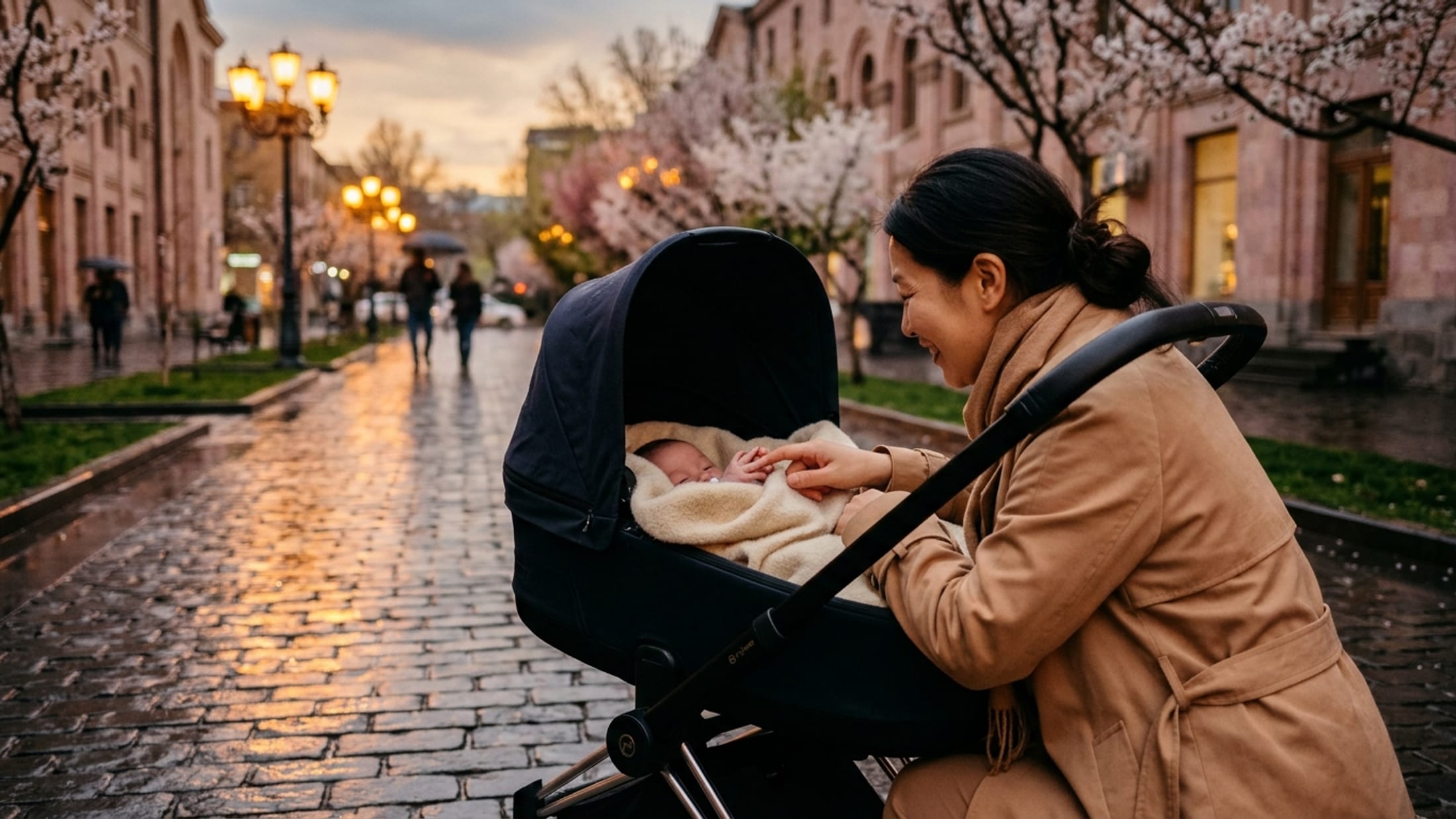
Their daughter arrived in early September at seven pounds five ounces. Paperwork in Yerevan moved cleanly, and on day twenty-four Lin Zhe walked out of the Chinese Embassy holding her crisp burgundy PRC Ordinary Passport, its biographical page printed clearly with Place of Birth: Armenia.
The visa was the hard part, as expected. As planned, Lin Zhe's leave ran out in Yerevan, and the day after the passport arrived he flew straight back to Seattle for a quarterly engineering release; Su Qing strapped on a breast-pump backpack and flew with their one-month-old daughter to her parents' flat in Guangzhou. On the day the passport was issued, she had booked the earliest interview slot at the US Consulate there.
At the window, the consular officer issued a 221(g) document request asking for a certified English copy of the Armenian birth record alongside three months of Lin Zhe's recent pay stubs. Carrying the baby through sticky October heat in Tianhe, Su Qing got the extra copies stamped and couriered back in.
Nine days later, the passport came back with a fresh H-4 foil inside.
Rain at Sea-Tac
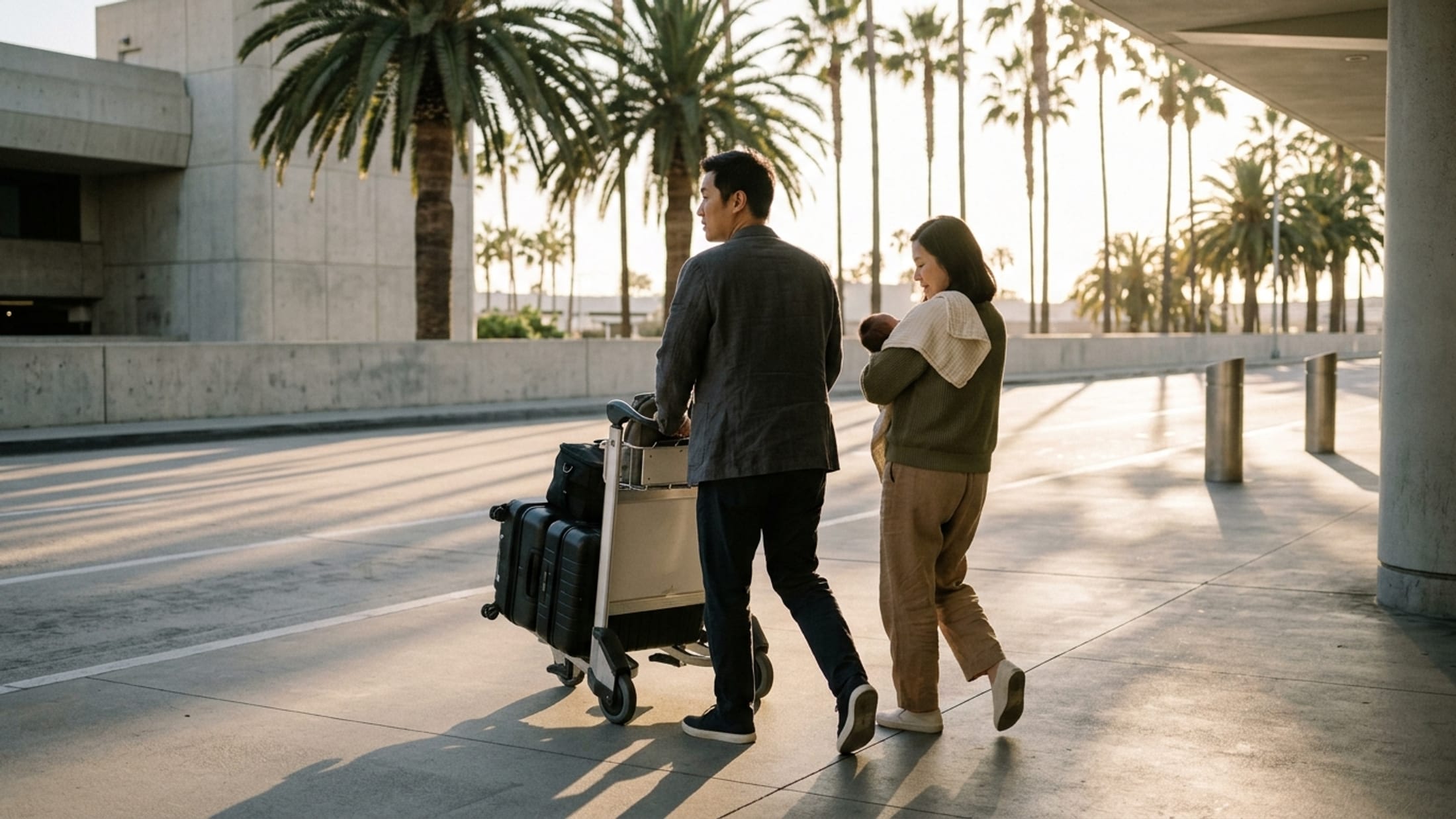
Autumn rain was slanting across the tarmac when Su Qing's Delta flight touched down in Seattle in late October. After forty minutes in the visitor queue, the CBP officer scanned the baby's tiny passport against Lin Zhe's I-797 approval notice and stamped her in under two minutes.
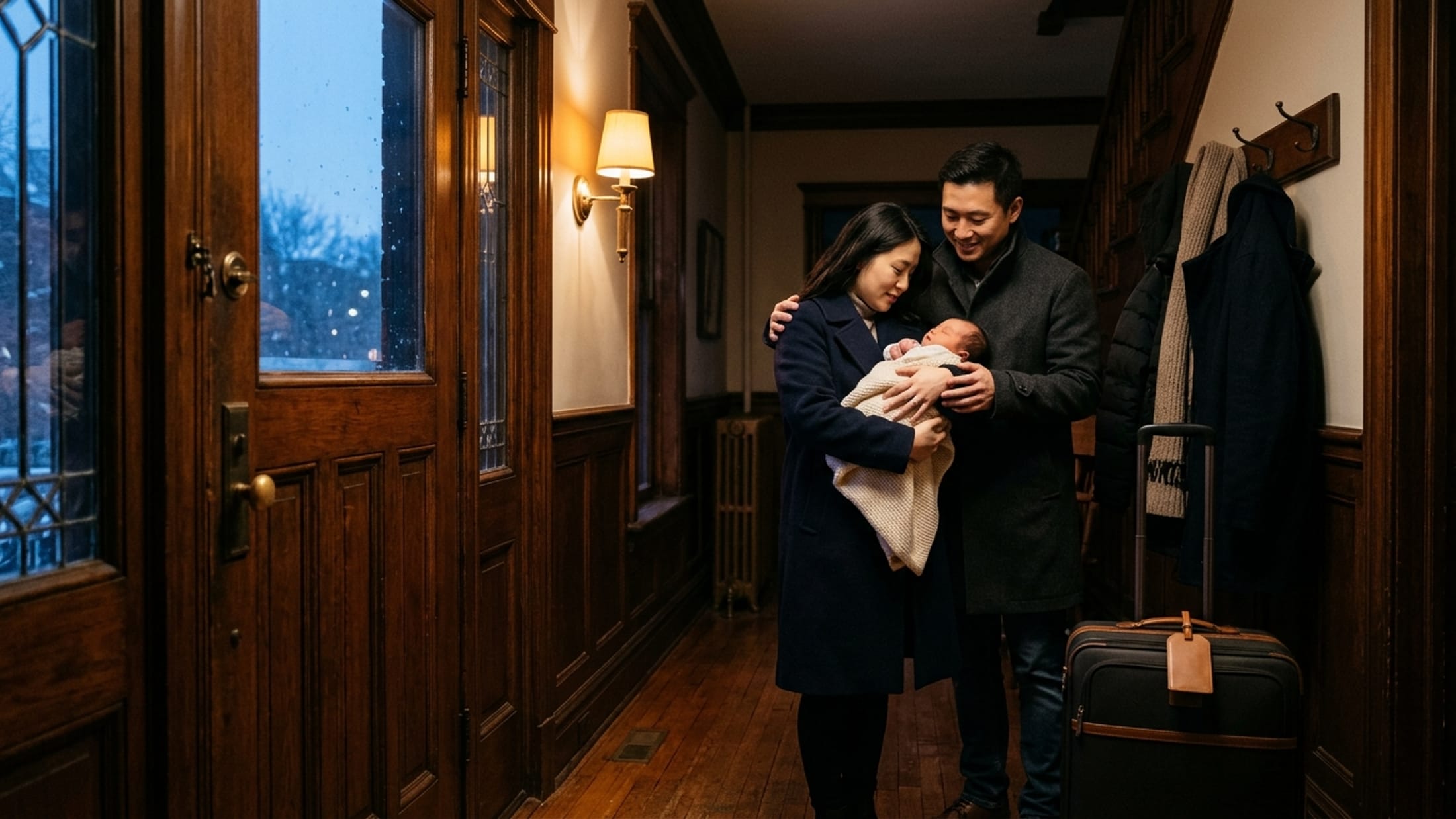
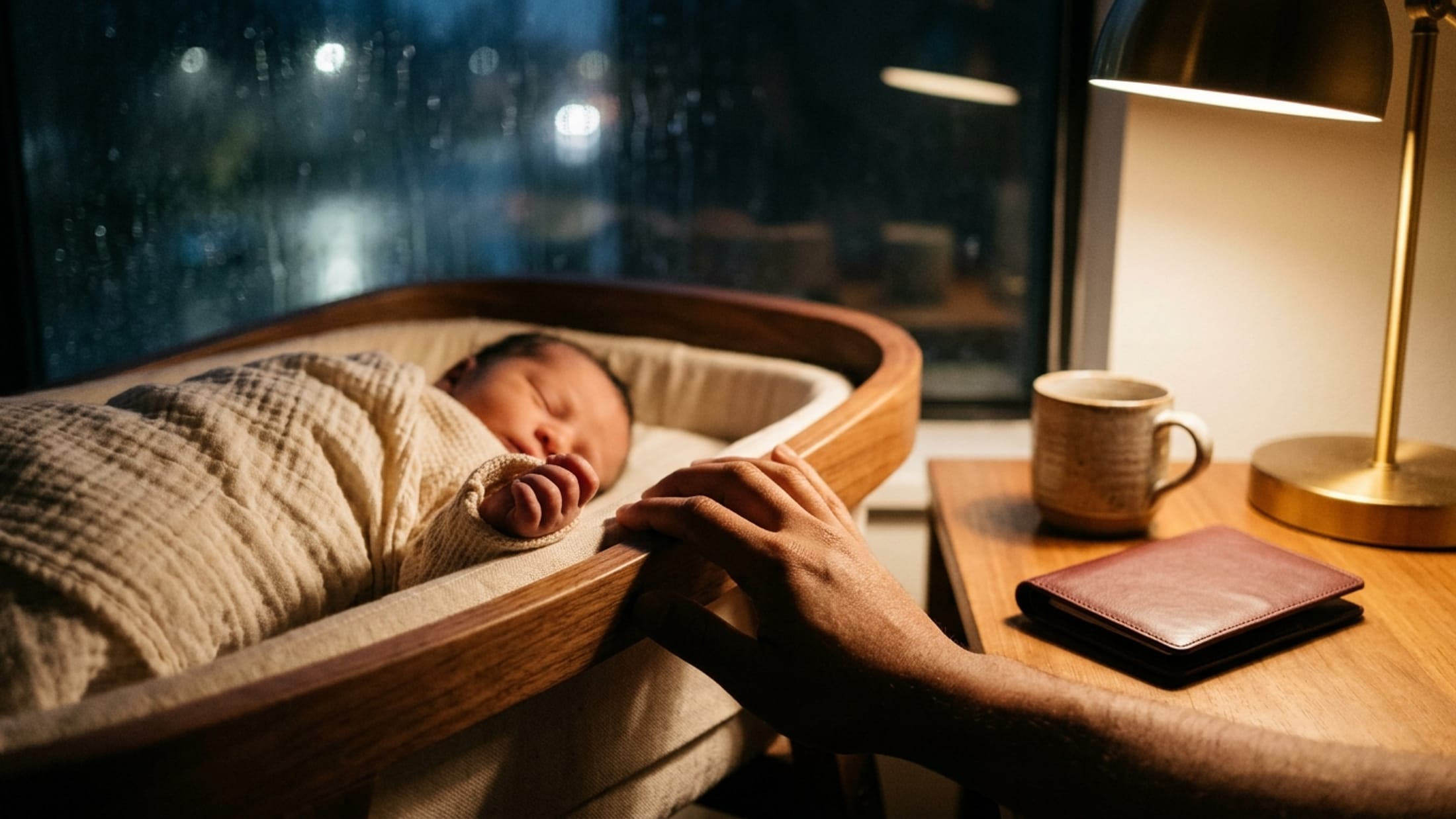
Waiting outside international arrivals with a black umbrella, Lin Zhe's knuckles were ice-cold as he lifted the infant carrier. By the time they reached Redmond it was past eleven; he ran downstairs to an all-night pharmacy for infant acetaminophen drops, and came back to find the ceiling lights off and Su Qing fast asleep against the sofa arm, coat still half-buttoned. On the oak dining table under the old brass lamp, their daughter's burgundy passport, H-4 visa tucked inside, lay closed beside a travel mug, warm light resting on the gold emblem.
Disclaimer: this article is general information and not legal or medical advice. Before making any decision on the legal matters discussed, consult a licensed attorney in the relevant jurisdiction; for medical matters, consult a physician.