Characters and events in this piece are composite illustrations drawn from typical cross-border journeys; all names are pseudonyms.
Closing her five-year survivorship chart at a major Boston cancer centre, the medical oncologist told Tang Mi she could finally come off tamoxifen — clean scans, clean labs. Tang Mi sat on the exam-room chair waiting for the second half of the sentence. Taking off his glasses, the doctor added gently that with a hormone-receptor-positive history, driving oestrogen sky-high through pregnancy remained a risk he would not advise for the next decade.
Outside on Brookline Avenue it was March 2025, slush still clinging to the kerbs along the Charles River. Tang Mi was thirty-eight, carrying a faded four-centimetre port scar beneath her right collarbone and an annual storage invoice from a local teaching hospital's fertility clinic for nine unfertilised oocytes frozen twelve days before her first chemotherapy infusion at thirty-two.
Back then she and Liang Yue were newly engaged, without time for legal paperwork to freeze embryos. Her reproductive endocrinologist had been candid from day one: unfertilised eggs survive warming far less predictably than blastocysts. Nine sounded comforting on paper; in the dish, attrition would be steep.
One 4BC straw and an N-400 oath
Before signing, two tracks had to align at once. First, Armenian law requires documented medical contraindications whenever a female applicant pursues surrogacy; once her oncology summary was notarised and translated, the Yerevan clinic's medical board cleared her file in seventy-two hours. Second came immigration status: both Tang Mi and Liang Yue held US green cards, and Liang Yue had just crossed his five-year permanent-residence anniversary four months earlier.
On their pre-check call, the US immigration attorney pointed out a clean path. Returning with a newborn as two green card holders typically meant filing an F2A Form I-130 and waiting abroad for an immigrant visa (as the port-of-entry waiver applies by text to an LPR mother giving birth abroad); if Liang Yue filed Form N-400 immediately and took his citizenship oath before the due date, their baby would acquire US citizenship at birth and fly home to Logan Airport on a US passport.
The real white-knuckle week arrived in mid-May when the cryo-shipper reached Yerevan and the lab warmed all nine eggs. Six survived thawing. Four fertilised via ICSI. By day six, after trophectoderm biopsy and chromosomal screening, the final report held a single green line: one euploid male blastocyst, graded 4BC.
Liang Yue was underground on the Green Line heading to his biometrics appointment when the PDF came through. Tang Mi sat at the kitchen island staring at the letters BC for half an hour — on IVF forums everyone celebrated pristine 4AA embryos, while 4BC sat near the bottom of transferable morphology, with zero backup left in any tank on earth.
The next morning her coordinator passed along a short note from the lab director in Yerevan: chromosomal euploidy outweighed beauty-contest grading every day of the week, and they would wait for a textbook endometrial lining before transferring. The July transfer stuck on the first try; in December, Liang Yue raised his right hand at Faneuil Hall in Boston, walked out a naturalised US citizen, and filed an expedited passport application the next day.
Wet flagstones after an April shower
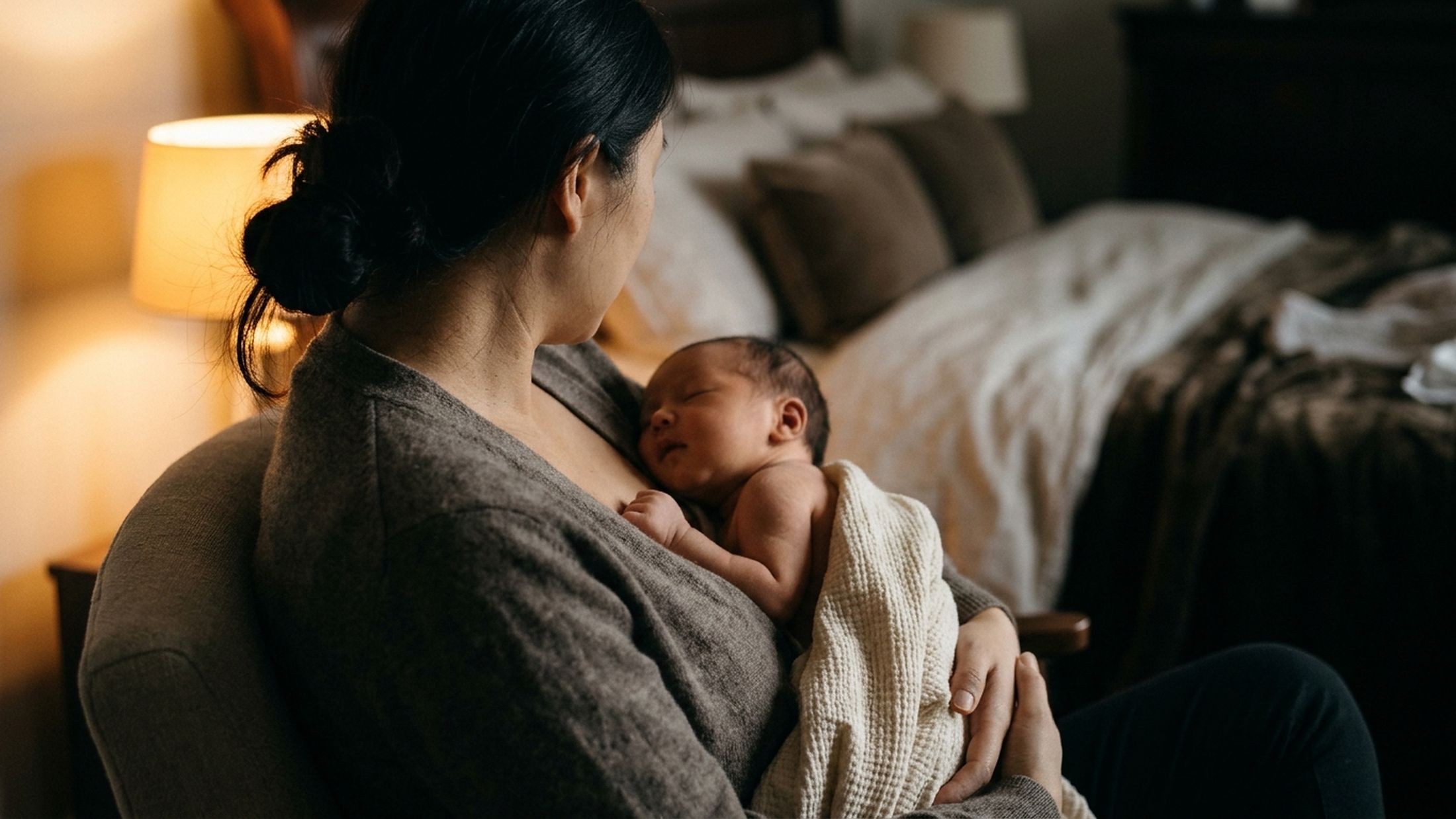
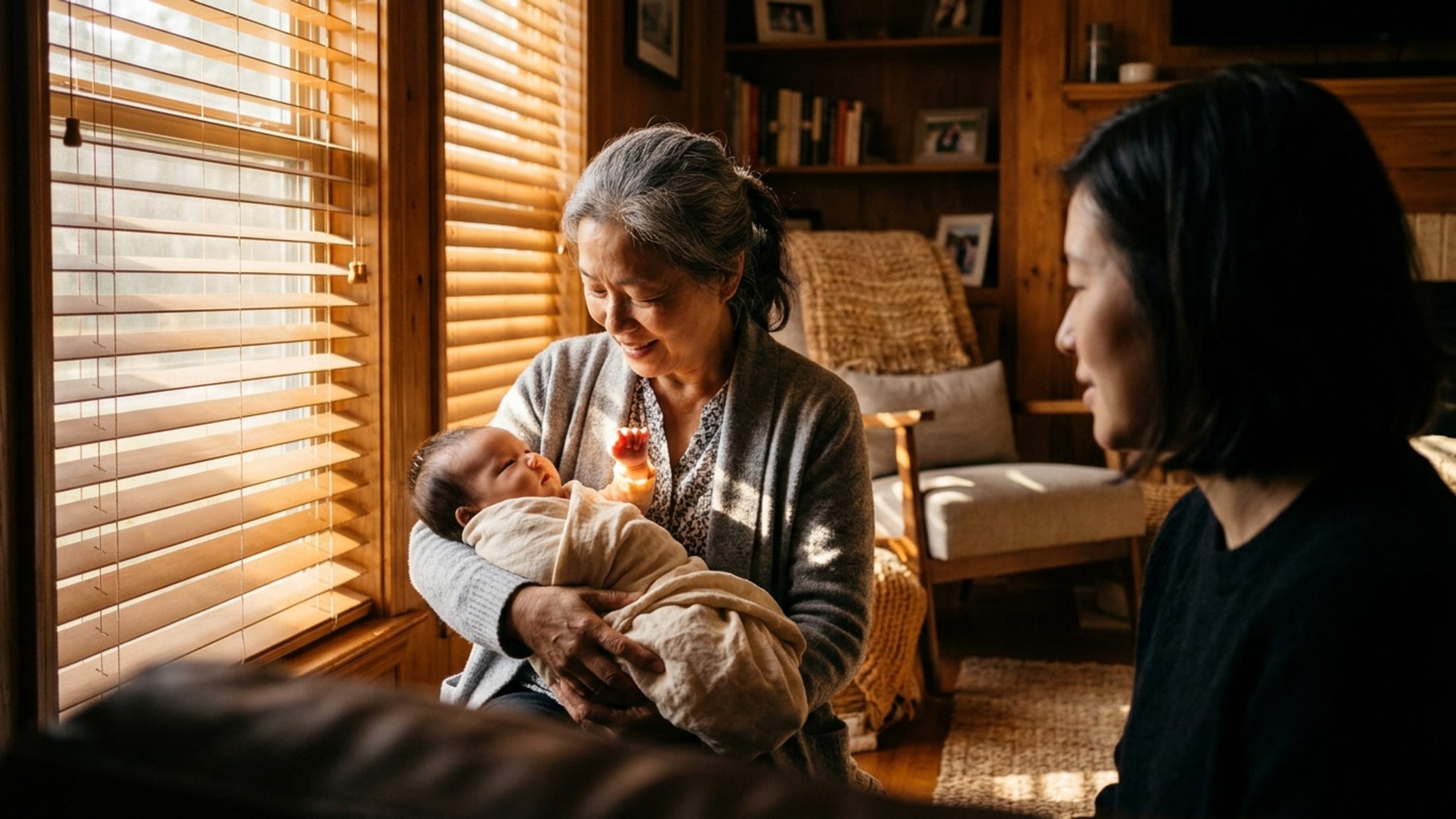
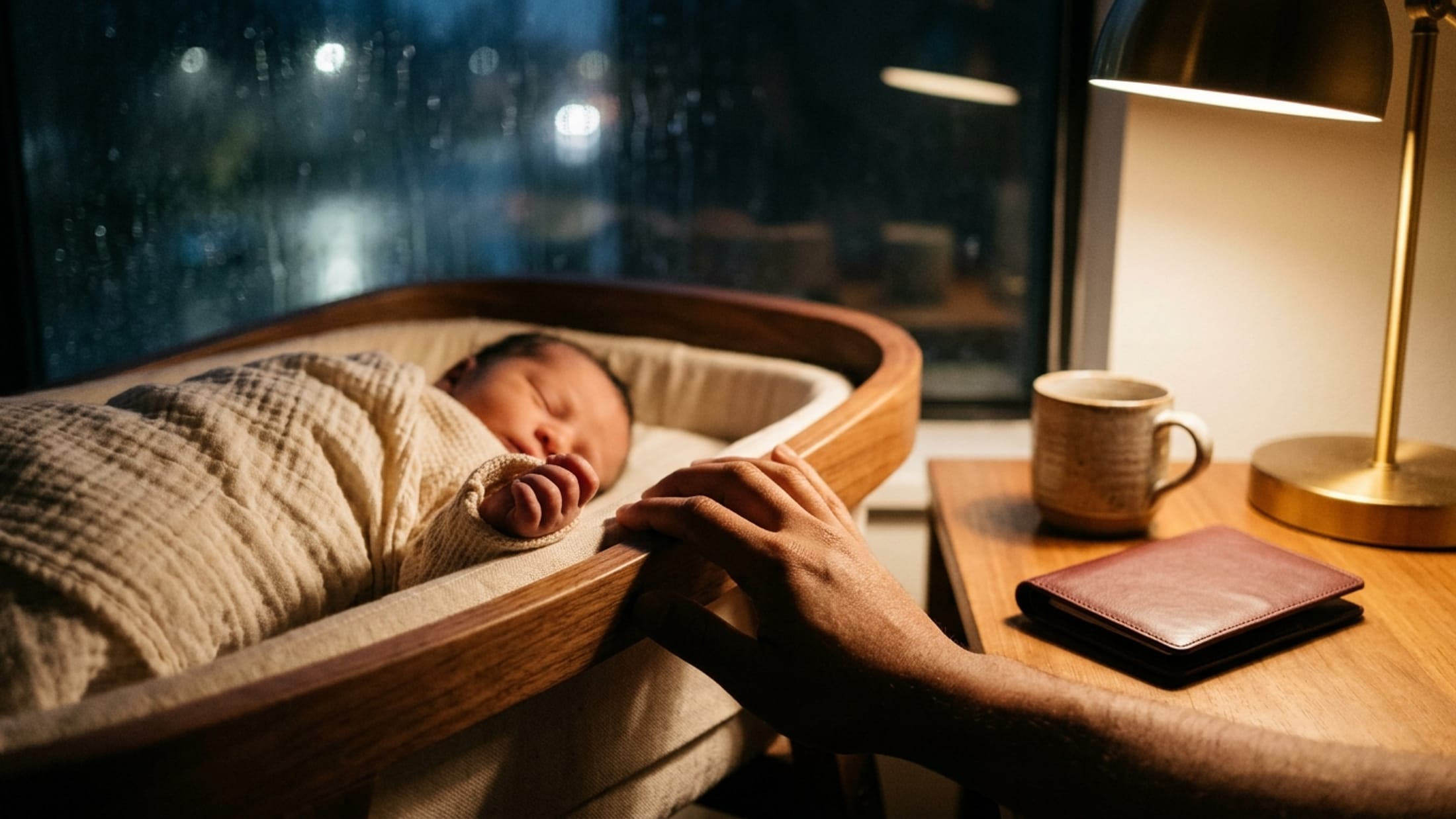
Their son arrived in early April in Yerevan at seven pounds twelve ounces, turning that lone 4BC blastocyst into the loudest pair of lungs on the maternity floor. With Liang Yue's naturalisation certificate, five years of US tax transcripts, and embassy-witnessed AABB cheek swabs, the baby's CRBA and US passport cleared in three weeks.
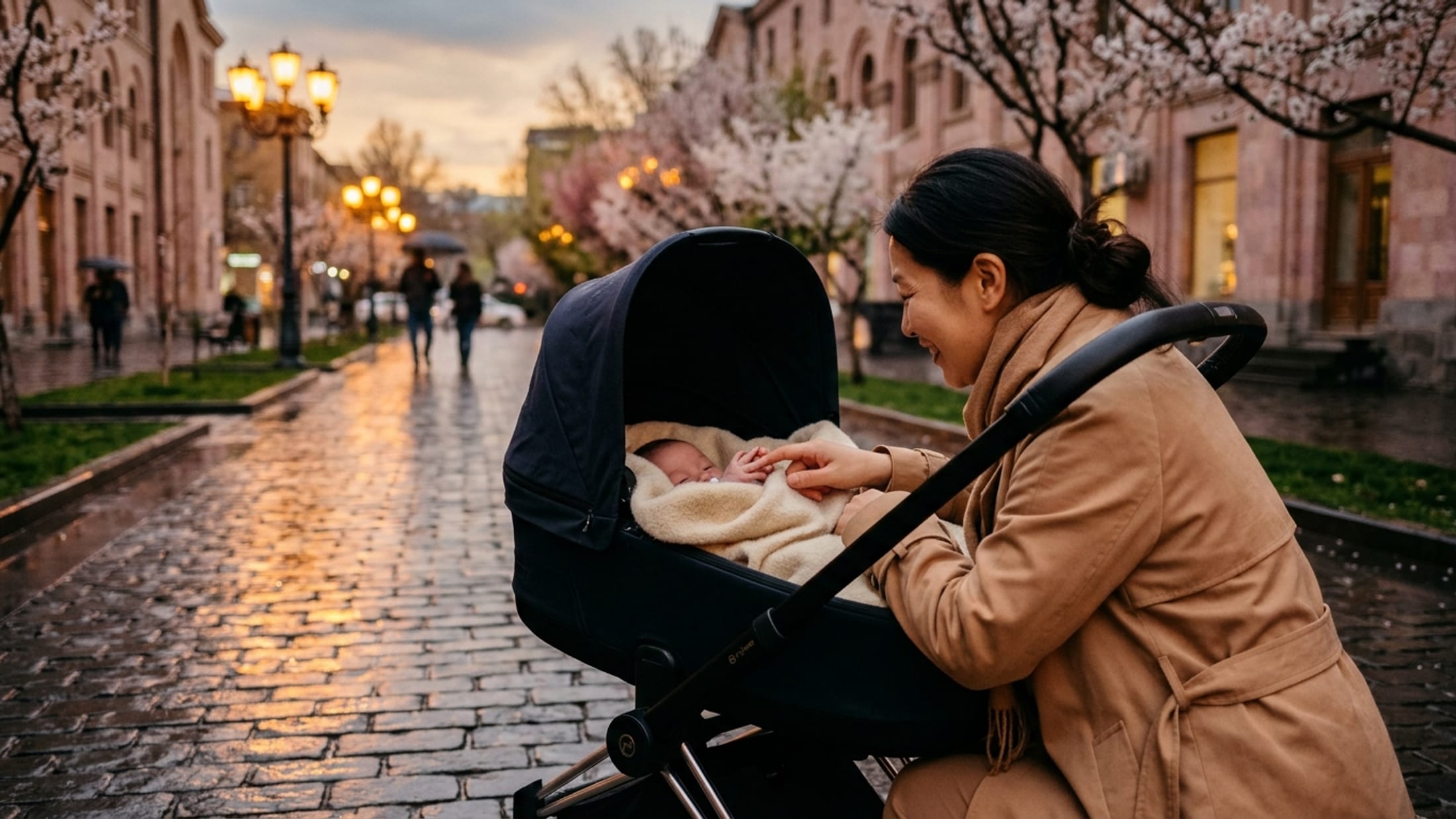
On their last evening before flying home, a twenty-minute sun shower washed the pink tufa pavements around Opera Square. Stepping out in a light camel trench coat to push the stroller through the cool air beneath blossoming apricot trees, Tang Mi saw her son stir awake without crying, waving five plump fingers toward the hood. She leaned down to offer her index finger; he locked his grip around it as the evening breeze brushed the pale scar below her collarbone.
Disclaimer: this article is general information and not legal or medical advice. Before making any decision on the legal matters discussed, consult a licensed attorney in the relevant jurisdiction; for medical matters, consult a physician.