Characters and events in this piece are composite illustrations drawn from typical cross-border journeys; all names are pseudonyms.
During the three weeks she spent waiting for travel documents in Yerevan, Ye Zhen slept better than she did at home; it was only after landing in Hong Kong and crossing Shenzhen Bay Port by minivan that she clutched the kraft document envelope tight against her ribs without noticing the seatbelt digging into her shoulder.
Thirty-seven and three years divorced, Ye Zhen ran a six-person industrial design studio in Shenzhen's Nanshan district. At thirty-three, during her former marriage, congenital cervical insufficiency had cost her a pregnancy at twenty-two weeks despite an emergency cerclage — leaving a Grade-A hospital discharge summary warning against carrying again. When her parents urged her to remarry quickly, she knew her own mind: she wanted a child, not a rushed second marriage licence to justify having one.
Half-truths on social media
Clearing Armenia's statutory medical-indication review with her hospital records and creating embryos with her own ova and bank-screened donor sperm went smoothly. What kept her awake at 3 a.m. were domestic comment threads insisting that an unmarried mother returning with a foreign birth certificate leaving the father's line blank would be turned away — or publicly grilled — at her district household registry.
Ahead of contract signing, her coordinator arranged a walkthrough of Shenzhen's registration rules with domestic counsel. Citing Article 1071 of the Civil Code, the lawyer explained why those horror stories almost always came down to paperwork errors rather than marital status: missing a Ministry of Justice Hague Apostille on the foreign birth record, or bringing an uncertified online translation lacking an official agency seal and business-licence copy.
In Yerevan, the civil registry issued her daughter's Birth Certificate naming Ye Zhen as mother with the paternal field lawfully blank, followed by a Hague Apostille and a PRC Travel Document from the Chinese Embassy. Three days after arriving back in Shenzhen, Ye Zhen took the originals to a licensed translation firm in Futian and watched the clerk stamp every page across the seam.
"Don't loop the final stroke"
Her slot at the Nanshan public-security service hall was 10:15 on a Tuesday morning. Leaving her sleeping daughter downstairs in the shade with her mother, Ye Zhen walked inside carrying her ID card, household booklet, passport entry stamps, the baby's Travel Document, and the Apostilled packet.
When screen A048 chimed, she sat down and slid the packet across together with the standard one-page unmarried birth statement. A clerk in her twenties leafed methodically through each sheet, checked the Travel Document under a UV lamp, and verified the Apostille serial number against the translation seal.
Not one of the ten explanations Ye Zhen had rehearsed in her head was needed. The clerk asked zero questions about a father or why the birth took place abroad, looking up only once as she turned the signature pad around: "Print clearly — don't loop the final vertical stroke on Ye, or the scanner will make you sign twice."
A dot-matrix printer whirred for thirty seconds and fed out a crisp household registration page bearing her daughter's name and eighteen-digit citizen ID number. Glancing at her watch as she stood up, Ye Zhen counted fourteen minutes start to finish.
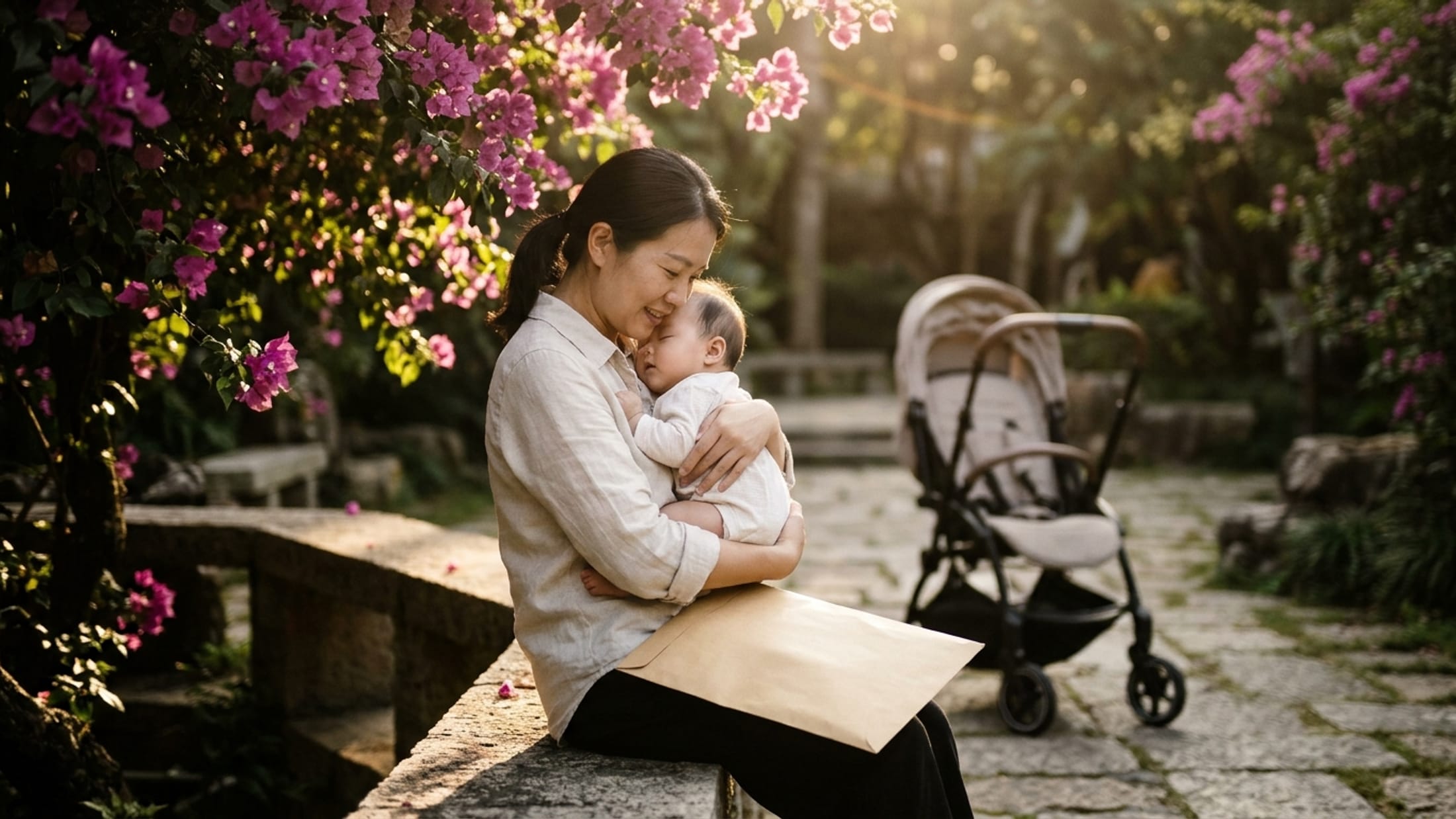
Outside the revolving doors, mid-November sun warmed the pavement beneath cascades of bright magenta bougainvillea. When her mother handed the sleeping baby back into her arms and went to fetch the car, Ye Zhen sat down on the low stone garden ledge with the kraft envelope flat across her knees, resting her chin lightly against the crown of her daughter's head.
Disclaimer: this article is general information and not legal or medical advice. Before making any decision on the legal matters discussed, consult a licensed attorney in the relevant jurisdiction; for medical matters, consult a physician.